



Denise Oliver-Velez
“I was in the Young Lords, and one of the points in the original program was ‘Revolutionary Machismo’. Machismo is reactionary, so you can’t have revolutionary machismo. We women weren’t having it. So we made a very different kind of statement. ‘We want equality for women. Down with machismo and male chauvinism."
Denise Oliver-Velez

In light of the global protests for justice ignited by the murder of George Floyd in Minneapolis, I wondered what wisdom could be gleaned from the ancestors and elders. The Women of the Black Panther Party immediately came to mind. . While searching through old articles, books, and videos, I began to truly understand, not just the message and mission of the Party, but the powerful spirit that was lodged in those young people.
So many of them sacrificed their lives--either to death or imprisonment. The fiver women I have chosen to highlight--Elaine Brown, Kathleen Cleaver, Ericka Huggins, Denise Oliver, and Assata Shakur--are thankfully alive and blooming.
I urge you to read their books, seek out their videos, and hear their voices. The timeless wisdom they have to offer is a gift to this and future generations.
I am struck by the magnitude of what was taken from us; what has been lost, and what remains. The struggle continues.
All Power To All The People - Fred Hampton


Young Lords Member
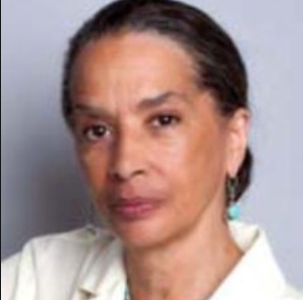
Political activist, feminist, journalist, community organizer, anthropologist, and member of The Young Lords Party and the Black Panther Party, Denise Oliver-Velez.
Photo Credit: John Buckley and Voices of New York.

I’ve been black, and proud to be black, my whole life. My parents raised me like that. They grew up as ‘Negroes.’ They had to drink at water fountains labeled ‘colored.’ They lived long enough to become Afro-Americans, and then African Americans.
I was, and still am, militantly black.”
— DENISE OLIVER-VELEZ FROM HER ARTICLE, I AM NOT ‘NON-WHITE'
Bold and brazen, Denise Oliver-Velez, 72, will not bite her tongue when it comes to injustice. And it is because of her radical rebelliousness and unwavering determination and dedication in the fight for justice and liberation for all oppressed peoples that Oliver-Velez is recognized as one of the most formidable activists and leaders of our time.
Active in several social movements such as the Civil Rights Movement, women’s movement, and HIV/AIDS activism movement, Oliver-Velez was a member of the Young Lords Party in New York. However, the Young Lords was originally a Chicago-street gang turned radical, Puerto Rican political organization founded by activist José "Cha-Cha" Jiménez in the late 1960s. The organization’s mission was to fight for socio-political and community empowerment and liberation of Puerto Rico––liberation of the island and inside the United States––and all Third Word people. As the children of Puerto Rican immigrants, the Young Lords––originally the Young Lords Organization and later, the Young Lords Party––built a national grassroots movement in the barrios of the United States.
The Chicago Young Lords formed after Mayor Richard J. Daley evicted and displaced Puerto Ricans and other Latino and low-income housing communities to establish an inner-city suburb in Lincoln Park. Influenced by the direct action campaigns and initiatives of the Black Panther Party and as a member of the Black Panther Party’s Rainbow Coalition led by Fred Hampton, the Young Lords addressed the stark racism and discrimination Puerto Ricans faced in Chicago such as lack of access to proper housing, education, employment, healthcare, and police violence. Occupying the McCormick Seminary and staging a sit-in at Chicago’s Grant Hospital to demand free medication, X-rays, and equipment, the Chicago Young Lords also trained youth and students as leaders to rally the Latino community at the national level.
Organizing neighborhood clean-ups and providing free community services, a chapter of the Young Lords was chartered and established in New York by students from SUNY-Old Westbury, Queens College, and Columbia University in 1969, where Oliver-Velez was one of the founders. Tired of the inequities that pervaded Puerto Rican and low-income neighborhoods in New York, the Lords led actions such as the “Garbage Offensive”, where they lit garbage on fire in protest of the prejudiced and discriminatory refusal of the New York City Department of Sanitation to pick up and clean garbage in their communities. In 1970, the Lords barricaded the Lincoln Hospital in the Bronx and demanded proper medical treatment for the community and with this, widely changed how the hospital served and provided healthcare access. Eventually splitting with the Chicago Lords, the New York Lords also established Palante, the official bilingual newspaper of the Party.
Like the Black Panther Party’s 10-Point Program, the Young Lords had a 13-Point Program, which was written in 1969. However, one of the points emphasized “revolutionary machismo”, stating: “We want equality for women. Machismo must be revolutionary...not oppressive.” Tired of the rampant sexism and sexual discrimination within the Party, where male members would relegate women to menial tasks and responsibilities such as secretarial work and child care and refused to appoint them to leadership positions, Oliver-Velez, and other women members demanded that the Central Committee of the Young Lords give full inclusion to women. Because of Oliver-Velez and other members’ activism, the 13-Point Program was revised in 1970, with the new point being: “We want equality for women. Down with machismo and male chauvinism.” Oliver-Velez was later appointed as Minister of Economic Development and became the highest-ranking woman in the Party. In her position, she was integral in spearheading women’s inclusion, writing, and production of Palante, where Oliver-Velez and others published the Young Lords Party Position Paper on Women in September 1970.
Always at the center of the Lord's mission was the liberation of Puerto Rico and their main slogan Tengo Puerto Rico En Mi Corazón (I have Puerto Rico in my heart), showcased that. However, after the Young Lords voted to physically transition its headquarters from New York to Puerto Rico, Oliver-Velez quit the Young Lords and became a member of the Black Panther Party. Here, she worked on the local Panther Party paper and did extensive international travel and solidarity work. Later, Oliver-Velez established herself as a pioneer in media, where she became the executive director of the Black Filmmaker Foundation and was a co-founder and program director of Pacifica’s first minority-controlled radio station, WPFW-FM, in Washington, D.C. She also published ethnographic research on HIV/AIDS and co-wrote, with Iris Morales, the foreword to The Young Lords: A Reader (2010), edited by Darrel Enck-Wanzer. An Iyalorisha Yemaya, Oliver-Velez was also an adjunct Professor of Anthropology and Women’s Studies at SUNY New Paltz. She is currently a contributing editor for the Daily Kos.
With all of the work that Oliver-Velez has done and continues to do, it is no wonder she is one of the most important Black women leaders of our time. And it is also no wonder why she is still and will always be radically rebellious and “militantly Black”.
Oliver-Velez spoke with Black Women Radicals about what led her into her activism; how her family was already involved and ingrained in radical politics and organizing; why it is important Black women have strong Black women role models; and what advice she would give organizers today. Read the entire post.